The future is a trend toward fairness, which means acknowledging that the way the world works today isn’t fair. Of course, it isn’t – and that’s exactly why it won’t stay that way. Progress is improvement; toward fairness is the greatest improvement.
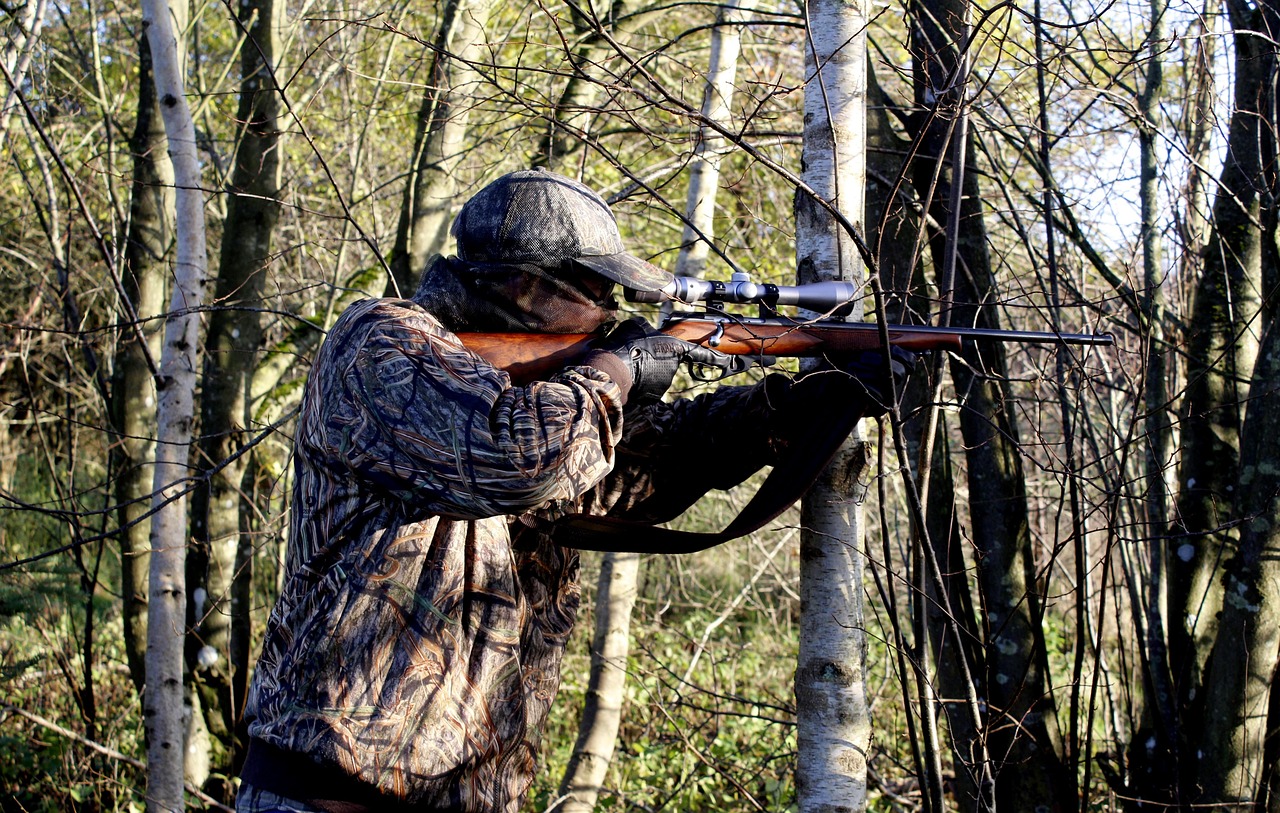
In my research into ways to make my money go farther, I read one blogger’s suggestion: go hunting. With absolute shock, I wondered what was different about his system versus mine, because hunting is the most expensive thing I’ve ever done.
There are a lot of reasons to hunt; saving money isn’t one of them. Even snowmobiling is cheaper, and everyone tells me it’s a rich man’s sport. Before you whip up labels and judgments, let me explain.
Where I live, if you want to hunt, the system starts with a license. When I signed up, I needed to commit to three evenings of class. At the time, I was commuting two and a half hours to work, and another two and a half hours home. For these three days, all I did was get up, drive, work, drive, learn, sleep, get up, repeat. It was grueling, and yet, I paid attention, learned the lessons, and aced the test.
Now, you can hunt with either a bow or a gun. If you want to hunt with a gun, the system requires a separate course and a separate license. For this one, I studied the book over a few days and passed the test.
Then, you need a tag. This is the cheapest part of the whole system, and this might be the only visible cost to outsiders. For less than fifty bucks, you apply to a lottery, and you might get permission to go after a doe, or, what is the default, a buck.
Technically Legal
Technically, the doe tag is an antlerless tag, a distinction that becomes abundantly clear after the bucks shed their antlers, you haven’t filled your tag, and you thought you’d have another weekend to try. Toward fairness, go home; you aren’t allowed to shoot at anything anymore this year. At some point, they are all antlerless, regardless of what rack they may grow next year.
Gun season lasts two weeks, and if you are still holding your tag and not meat for your freezer, you might go buy a bow. Bow season extends past gun season and into mid-December. When it happened to me, my boyfriend bought me a bow, arrows, and everything I needed. It was about fifteen hundred dollars.
December in the bush is cold. There’s snow on the ground. If you want to survive, you need good clothing. Good clothing isn’t cheap. Maybe you can borrow some clothes, as I did for years, until one hunter said to me, “Why don’t you get a job and buy your own clothes?” So, I did. Enter my camo with pink trim.
You can practice shooting targets, also, not free, but it’s no match for the real world. Targets are static, the world is dynamic, and a static system is no substitute for the other.
Deer will hear you, smell you, and react to you. One step at a time, and then, off like a firecracker.
Hopefully, you get to see something within range that you are allowed to shoot, but several years went by before this happened for me. Several. Like eight. I asked around to check my experience with other hunters, and many of them are still loading and unloading the same bullet and arrow year after year.
Missing
I once found a moose antler shed with a bullet hole. Others tell me how many times they’ve missed. I couldn’t help but wonder, if you miss that wildly, are you going to blow the meat all to smithereens, or are you merely going to mortally wound it, and feed the wolves?
Why are you pulling the trigger if you aren’t 100% sure?
I wasn’t even sure I had the stomach to shoot. My dad said, “I don’t think I like the idea of you hunting.”
I replied, “Don’t think of me then.”
I came across a cartoon in a hunting magazine. Someone irate had written in, “Why don’t you get your meat at the grocery store like everyone else!” I worked for a food company and had to learn about the meat processing system.
Meat processing was enough to make us all swear off meat after we’d watched the company training videos about how they do it. The videos point out the risks and the measures in place to mitigate them, and we all leave that training session as newfound vegetarians.
The vegetarian resolve lasts until lunchtime, when they bring in a fully catered buffet. Resolve was out the window with the first whiff of bacon, or was it the cheeseburger, or steak? Toward fairness, it smelled delicious. I ate freely. It was, well, free.
I gained a lot of weight, and worse, I learned that the company’s culture was that if you didn’t have a solution, shut up about the problem, because management would prefer to be comfortable than informed. In a culture like that, problems are going to explode, not disappear, and years later, when the headlines appeared, I was saddened, but not surprised. Prioritizing comfort over truth never lasts in the long term.
Deserving
The very first shot I took was with a crossbow. I had an antlerless tag, and therefore watch out, Bambi, but toward fairness, would I? It was a moral dilemma I contemplated philosophically until the moment arrived.
Sitting in my tree, I could see three deer approaching. I thought it might be a family; there was clearly a buck, and the other two were a fawn and a doe. The fawn was coming first, but I hesitated, deciding to wait for the buck. I watched Bambi eat for a while, and then saw the buck kick the doe in the chest.
What was going on? The doe was trying to approach, but the buck stood in front of her progress and kicked her again. Well, my idea that this was a family was replaced by another idea, one born more out of The First Wives Club than Disney. I might not have ever been left for a younger woman, but maybe I haven’t gotten old enough yet.
With the kind of resolve toward fairness that those four women had, I aimed at the fawn, who was no longer Bambi, because Bambi is male, but that cheap hussy who destroys marriages and wrecks families. Oh, I could shoot now.
I missed; I totally missed. I missed so badly that I didn’t even scare the deer. In fact, this deer, only fifteen yards away, had dropped like a stone, or rather, like Bambi on ice, immediately and totally flat to the ground at the first whack from my bow. I was stunned by how quickly it happened and how quickly it went right back to eating as if nothing had happened.
My arrow landed in a tree behind her. I wondered how long I’d have to stare at it.
Second Chances
I decided that if I can’t hear anything when I am chewing, maybe the deer couldn’t either. I decided to use that possibility to reload my bow – not a quick or easy task in a tree stand.
Toward fairness for a second chance, it required pulling out my cocking rope, standing up, and getting my foot into the front stirrup, pulling with all my might, locating a new arrow out of my quiver, and getting it inserted in the track – all without drawing any attention my way.
Phenomenally, I did it. Again, I aimed at the fawn, much lower this time.
Again, it was too high, and unfortunately, this time, the deer moved on, sauntering away happily fed, no idea that it was ever in danger, and clearly, it wasn’t.
Later, I reported what I’d learned about where to aim. When this person missed too, I asked if they’d listened to my advice, “No,” he said, “It just seemed far too low.”
The third time is the charm, although years passed in between.
Finally, one cold December day, I saw that there was only half an hour of shooting time left. Thank goodness, I thought, because I can’t feel my toes. I slowly started packing up and getting ready to leave. That was when a buck came into sight.
Using all my stealth skills to reload my bow, I got ready, waited for the right moment, and let it fly. My heart beat in my head, and I no longer had any thoughts of being cold, tired, or wanting to get home. Now, I just wanted to see if I’d done it right.
Toward fairness of correctly applied labels, I wanted to see if I could now finally call myself a hunter, and mean it.
Synchronized Shooting
Just then, I heard my boyfriend coming on his ATV. I ran to meet him, but he drove past me as if he didn’t see me. Toward fairness, maybe he didn’t. I was in camo after all. I ran after him and caught him at the camp, hooking the trailer onto the ball. “But I don’t know if I even got it!” I said. “What?” he asked, “This is for my deer. Did you get one too?” I repeated that I didn’t know; he had kicked and run out of my sight.
My buck didn’t get far. I learned that a hunter must track their deer for 24 hours. It took us twenty minutes to find mine. I found blood, and we followed the trail, staring down intently at one drop after another, and then there wasn’t any.
My boyfriend turned around and headed back. I thought he didn’t want to walk any further, so I ran ahead to do it myself.
He corrected my assumption, and I turned back too. That’s when I saw it, like, why didn’t I see that when I walked past it the first time?
Mine was a three-pointer, and his was eight. People ask, “How do you know how many points a deer is worth?” You count how many tines there are on the antlers, and if you can hang a ring on it, it counts as a point.
Within a couple of hours, the deer were processed and were on our way home. I was beyond grateful. Recounting all the years it had taken me to achieve this success with the lens of a graduate, no longer the student, but crossing the stage to receive my diploma, in full regalia, with an audience cheering my efforts.
Freezers Filled
I bowed toward fairness in thanks for all the lessons I’d learned from the more experienced, from those who published their tales for my education, or all the deep breaths I’d had to take to work through every emotion that sitting alone for hours in the wilderness will bring up. Hunting is work.
Two deer will fill the freezer! Maybe, but as it would turn out, not my freezer.
Thinking we needed help with the butchering, my boyfriend called in another couple, who will remain anonymous. He and I focused on getting meat through the meat saw, while they focused on taking the cut meat out of our hands and placing it in coolers.
It wasn’t until we were at home, and opened our cooler that I noticed something was severely wrong. “Did we get the wrong cooler?” I asked.
“Well,” he said, “I did say, take what you want.”
It turned out that they wanted all of it. All of it. I cried and cried for days and days, although, progressing toward fairness, there was no one to blame. Miscommunication. Maybe “my deer” was never mine, as it wasn’t my land. Perhaps whatever my boyfriend says about his stuff applies to mine, too. Maybe everyone looks at “free food” the same way I would – with eyes bigger than my stomach, and a biological need to stock up. Blameless, if I wish things had gone differently.
I wanted to know whether age affected the meat’s taste. But I couldn’t tell which was which. I had recipes I wanted to try, but ended up with not enough to bother, or none of the required cuts. Oh, the pain in making plans only to have the rug pulled out from under you. Groundlessness is not a fun place to be.
Unavoidable Experiences
Toward fairness, hunting is an unavoidable meditation. You sit in the wilderness all by yourself for hours. There is nothing to distract you. These days, hunters have their phones, and I hear old hunters say, “That’s it. I’m not hunting with them anymore. All they ever do is stare at their phones. Once, I walked right up to one of them and yanked their gun away before they even realized I was there.”
Sitting alone in the wilderness is prime time for memories to resurface. Memories with unpacked lessons and emotions you didn’t want to experience when they first arrived are unavoidable.
You can sit in the bush and hold a gun, but you aren’t going to see anything to shoot. You won’t be there long enough, you will be too fidgety, too loud, too much of a red flag for any deer to approach. Just like that, you, too, will be unloading the same bullet, the same arrow, and telling me that there just aren’t any deer in the bush.
If you want to be a hunter, you have to be able to put up with yourself, one, and two, you have to be able to scout.
In those eight years, I kept seeing deer, but far out of range, yet consistently along the same path. Over time, I learned that there are buck trails and doe trails, and they intersect. There are winter trails and summer trails, and where they go during gun season, in November, is different from where they go during bow season, in December.
Finally, I said, “I want to be over there, in a ground blind.” Finally, I knew enough to know a winning strategy. Although I could have built one, I bought one. More money spent.
Good Spots
During my first gun season, I took a walk along the buck trail. I knew it was a buck trail because I found antler sheds along it. Two beautiful matching antlers that would have been a very nice ten-pointer.
On this walk, I came across another hunter’s tree stand. Since everyone was on their phones, there was indeed a group chat that was always going off.
I sent a text, “Can you see me, because I can see you.” Ding, like the deer can’t hear that, lol.
“No, I can’t see you, you are fine,” he replied.
I didn’t point out that if you can’t see me, you can’t shoot me, so what are you hunting? It reminded me of the old joke about someone looking for something under a street lamp. A helpful Samaritan stops to ask, “Did you lose it over here?” He says, “No, I lost it over there, but the light is much better here.”
My first gun season was also my last. I filled my tag in the early afternoon on the first day, at about 1:45 pm.
“Yay, now I get to go home, right?”
No, I found out, toward fairness, not until everyone’s tag is filled. That year, I spent the next thirteen days pretending to hunt, but I never loaded another bullet. I watched a spike horn arrive ten feet away from me, and never knew I was there. I watched a doe and her fawn, and laid down my weapon. Then, I watched what I thought were two does, only to see up close that they had bloody round spots on their heads, and therefore, they were antlerless bucks.
That year, the only other deer harvested was a fawn. At least, male. Everyone else claimed not to have even seen anything.
Dividing Meat
At the end of gun season, I watched the system as the meat was butchered and divided.
It was decided that one share per household for anyone who showed up at all during the two-week period would be the way it would work.
That meant I got half a share. I was there every day, all day, and someone who was there for three days, who was not even positioned to even see a buck, got more of my meat than I did.
All this work for what?
Toward fairness, I’m happy to be in your hunting party, as long as you don’t think that you’ll do the partying and I’ll do the hunting. I prefer bow season, as they say.
I learned, though, that I was not with hunters, but with shooters. Shooters fire their guns. Every shot is heard by all, and in the group chat, someone has to ask, “What did you shoot?” You can’t imagine my frustration when the answers come back, “It was a bird,” or worse, “Entertaining the dog.” That’s great, because you just scared all the deer away.
I said, “I can’t believe he spent a ten-dollar bullet on a partridge.” I learned that his bullets were three times the price of mine and that he missed the first time. It was a $60 snack.
I’d simply like to say that I am a self-sufficient meat lover. I tried vegetarianism, and I couldn’t make it work. I experimented with veganism, and I couldn’t find a way forward with it.
Instead, I found hunting. It’s not cheap, it’s not easy, and it’s not for everyone, but toward fairness, it’s only humane to be accountable to your food system.
Leave a Reply